The Chelmsford guide
Artificial Grass Installers in Chelmsford: What to Ask
A plain guide to what the work involves, what a good quote should cover, and the questions that tell one installer from another.
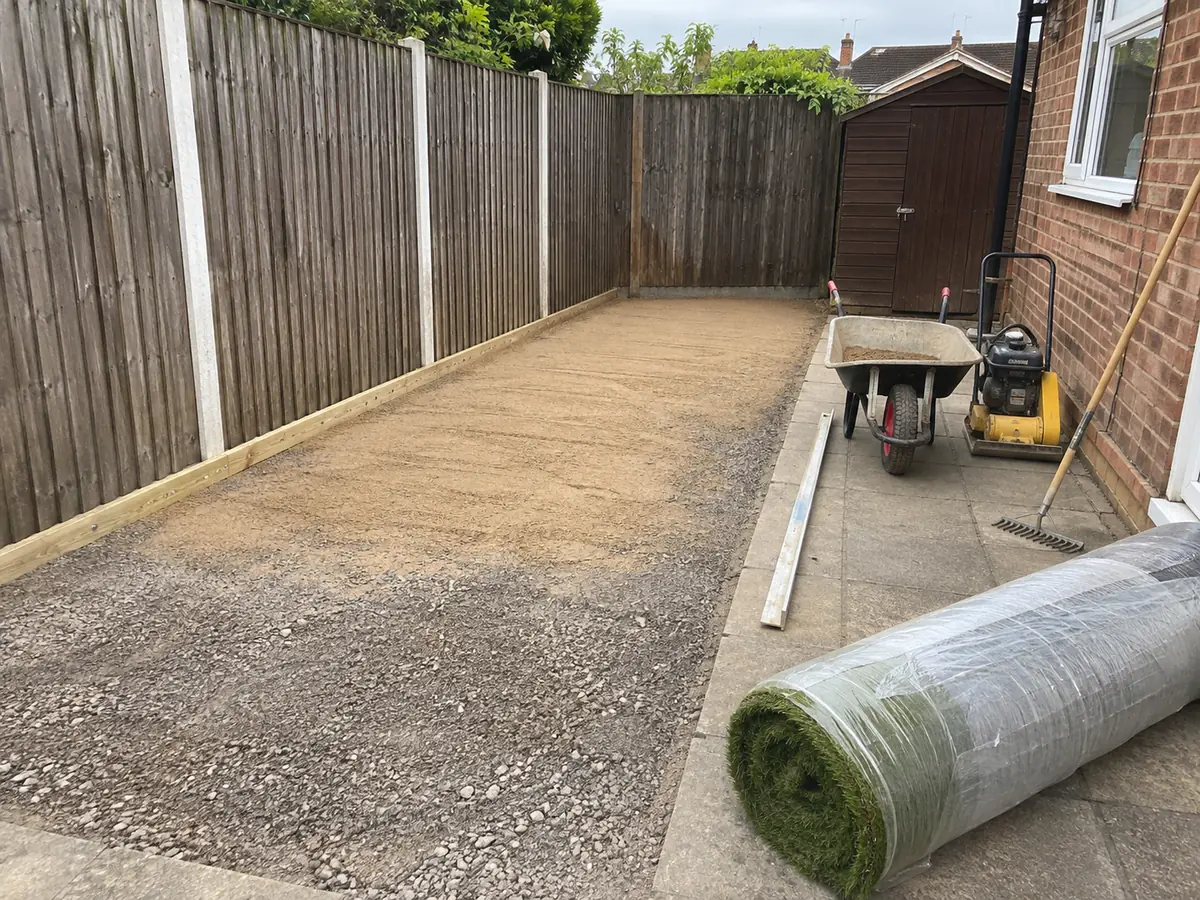
What the job involves
Artificial grass is the top of a stack. Below the grass sits a fine laying course, below that a compacted stone base, and below that the ground your garden already has. Most of the cost and most of the skill is out of sight, in the base.
- Clear and dig out. The old turf, roots and a few centimetres of soil come off. Where the garden is a former patio or a new-build plot, other material may come up too.
- Fix an edge. A firm perimeter, usually timber or a brick row, gives the grass something to be pinned to.
- Lay and compact the stone base. A level, firm bed that drains is what keeps ripples and puddles away.
- Add the laying course. A thin layer of sharp sand is raked flat and compacted.
- Roll out, trim and join. Sheets are cut to fit, joins are glued or taped so the pile direction matches, and the edge is tucked tight.
What a good quote covers
Two quotes with the same total can describe two very different jobs. Ask each installer to write out the same list so the numbers can be compared fairly.
| Ask about | Why it matters | A fair answer sounds like |
|---|---|---|
| Depth of stone base | Too shallow and the lawn settles or ripples | A stated depth, with the reason linked to your soil |
| Edging | It holds the whole lawn down | The edge material named, and how it is fixed |
| Joins | Seams are the first thing the eye finds | Where they fall, and which way the pile faces |
| Waste | Lifted turf and spoil need a destination | Removal included or priced as a separate line |
| Drainage | Rain still needs somewhere to go | How the backing and base let water through |
Choosing the grass itself
Pile height is how long the blades are. A longer pile looks lush from the window and flattens where feet fall every day. A shorter, denser pile is firmer and less glamorous. Blades in a mix of greens, with a tan layer low in the pile, look less like a carpet. Ask for a sample and put it outside in daylight, because shop lighting flatters every colour.
Before you ring round
- Take pictures looking out from the house and back towards it.
- Note where water sits after rain.
- Measure roughly with the lawn measure helper.
- Find out if your street is in a conservation area (see planning).
What would your own lawn cost? Tell us about it and see.
Start your quote