Weather and lawns
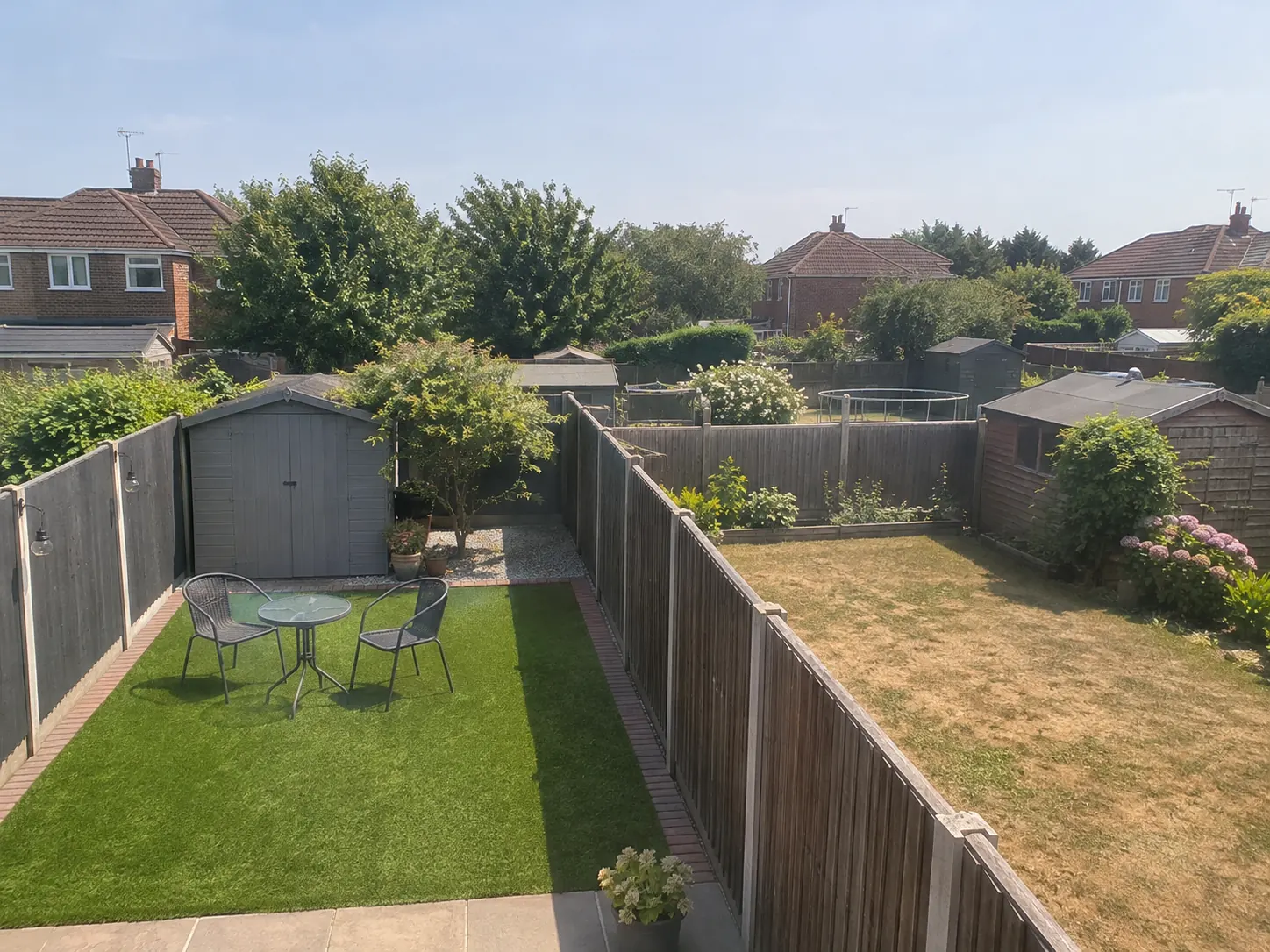
Real Lawn or Artificial Grass in a Dry Part of Essex?
The Met Office record near Chelmsford shows about two-thirds of the rain that falls on England as a whole. That is good for barbecues and hard on grass. Here is the honest case for each lawn.
How dry is Chelmsford?
Sources: Met Office, Writtle climate averages 1991 to 2020; Met Office, England areal rainfall series (the England figure is our own average of its thirty yearly totals).
Writtle is a village near the city, and its Met Office station is the climate record used here. Over 1991 to 2020 it averaged 586 mm of rain a year, which is roughly two-thirds of England’s average. March is the driest month at 35.5 mm; October is the wettest at 62.7 mm. July and August typically top 23 degrees for the afternoon high.
Dry does not mean without stress. The Environment Agency’s 2021 decision on water stress lists Essex and Suffolk Water among the companies in areas of serious water stress. See the Environment Agency and Defra, Water stressed areas: 2021 classification (1 July 2021). If your supply comes from that company, that is worth knowing when you think about a lawn that is green without a sprinkler.
The case for keeping a real lawn
A brown lawn is not always a dead one. On drought care the Royal Horticultural Society says the underlying roots should still be alive, ready to send up fresh leaves once rain returns. It also advises people to resist the temptation to water established lawns through the summer months. Source: RHS, Lawn care for drought conditions.
There is a wildlife point too. In an article dated 23 October 2024, the RHS reports Dr Mark Goddard saying gardeners should avoid artificial lawns, garden lighting and even keeping a cat. Source: RHS, Five myths of wildlife gardening, pitted against science (23 October 2024). If wildlife is your priority, a real lawn, or a smaller artificial one beside a border of flowers, may suit you better.
The case for artificial grass
- Deep shade. Under a fence line or a neighbour’s extension, grass struggles in any weather.
- Hard use. Paths, play areas and dog runs wear real turf into mud by February.
- No mowing. For some households, the time saved is the point.
- Awkward ground. A small, sunless back garden may never hold a decent lawn.
Artificial tends to suit
- A shaded or north-facing lawn
- A play space used year round
- A path worn into mud
- Someone who has stopped enjoying mowing
A real lawn tends to suit
- A sunny, open lawn that recovers each autumn
- A garden full of insects and birds you want to keep
- Someone happy to let it go brown in a dry August
- A big lawn, where cost adds up
Questions about heat and rain
Ask each installer how the surface behaves in a hot afternoon and after heavy autumn rain. Pile, colour and backing make a difference, and a sample left in the sun for an hour on your own patio tells you more than a brochure.
Weighing it up? Send the details and compare the answer with leaving things as they are.
Start your quote